FPL penalty takers and set-piece roles: 2026/27
Penalty duty matters because it provides high-value scoring chances, but penalty-taker rankings are never permanent. Injuries, tactical changes, substitutions and squad selection can all shift responsibilities. This page prioritises the strength of evidence over an invented all-club list.
Evidence hierarchy for penalty takers
| Evidence | Confidence implication |
|---|---|
| Recent league penalty with senior first-choice players present | Strongest practical evidence |
| Multiple competitive penalties across league and cups | Strong supporting evidence |
| One cup penalty when usual taker absent | Indicates a backup role, not necessarily first choice |
| Manager or player confirmation | Important, but verify match context |
| Preseason penalty or shootout | Weak signal for normal league matches |
Latest FPL news
Notable 2026/27 names to monitor
| Club | Player | Evidence or question | FPL interpretation |
|---|---|---|---|
| Man City | Haaland | Established spot-kick responsibility | Raises forward scoring ceiling when fit and selected |
| Chelsea | Palmer | Established premium penalty route | Verify he is on the pitch and fit before purchasing |
| Arsenal | Saka | Previously prominent penalty option | Injury status could affect who takes the next kick |
| Brighton | Groß | Set-piece responsibility, past penalties | Multiple scoring routes but rotation affects minutes |
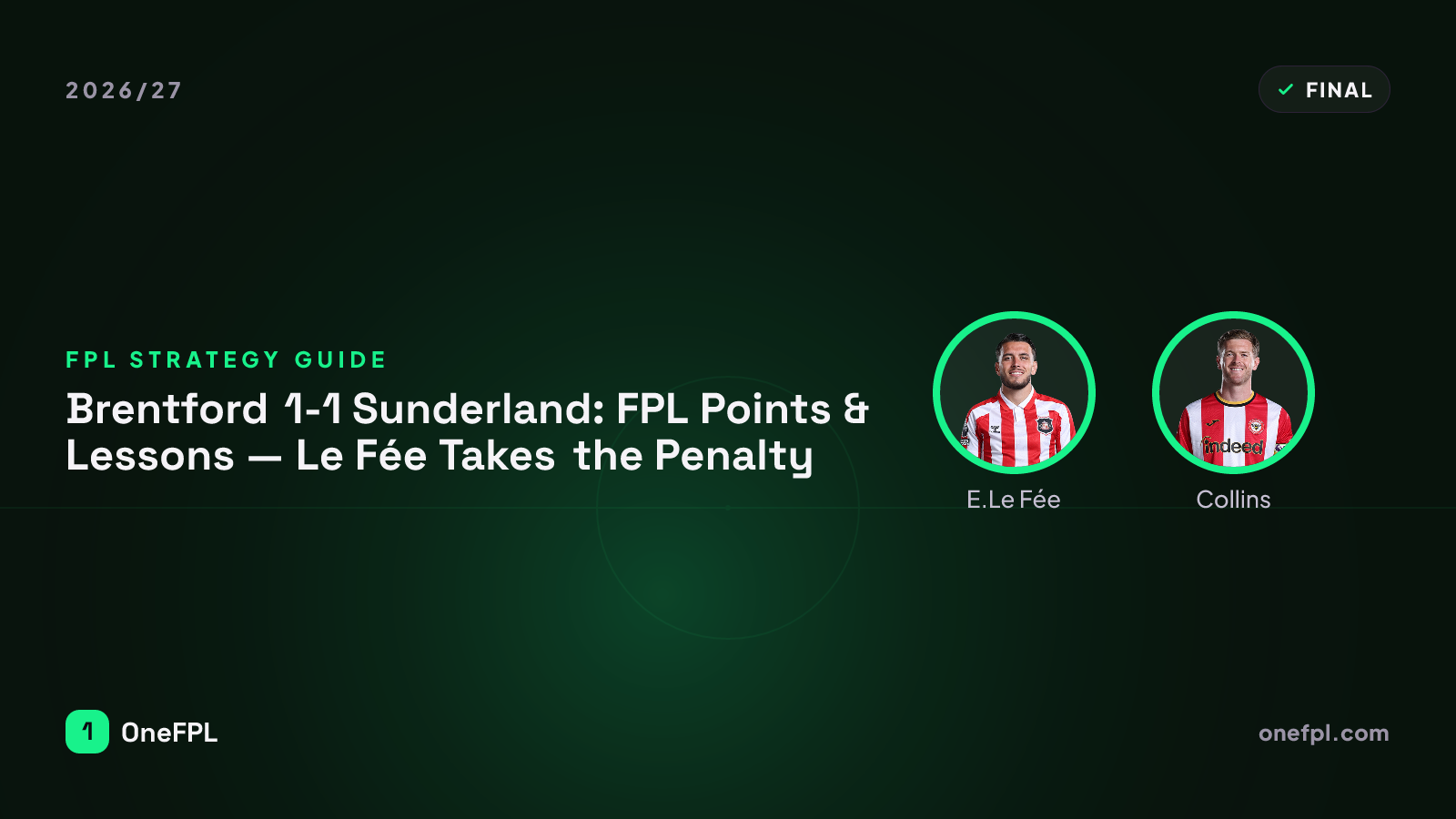
| Sunderland | Le Fée | Competitive penalty-taking evidence | Check whether priority holds with full XI |
| Crystal Palace | Strand Larsen | Scored a European penalty | Strengthens his case; one kick does not prove exclusivity |
The table describes evidence categories, not a guaranteed selection or comprehensive list of all 20 clubs. A player's fitness and presence on the pitch remain prerequisites for earning a penalty opportunity.
Set pieces are not all the same
Direct free kicks provide occasional shots on goal. Corners and indirect free kicks create assist and secondary-chance opportunities. Penalties generally provide much higher conversion probability than open-play long shots. Evaluate who delivers each type and how frequently that club wins useful dead-ball situations.
What happens when a primary taker is injured?
Do not immediately assign the role to the player who took one penalty in training or during a shootout. Look for evidence with the primary taker absent: which senior players were on the pitch, who took competitive penalties, and whether a manager discussed the hierarchy. Arsenal after Saka's reported thigh issue is a good current example of why this page needs updates, not an unsupported new definitive ranking.
Practical FPL value
A midfielder with penalties, corners and 80-plus expected minutes can offer a valuable points floor. But a set-piece specialist who starts infrequently may be less useful than a nailed attacking midfielder who rarely takes them. Compare shot involvement, chance creation, expected minutes and fixtures in OneFPL Player Lab.
When to refresh this guide
Update after every relevant competitive penalty taken by an unexpected player, manager confirmation of a hierarchy, or injury that removes the established taker. Include the match date and the players who were actually on the pitch. Avoid replacing an old table with guessed names simply to make it look comprehensive.
OneFPL verdict: use penalties and set pieces as additional evidence in a player comparison, not as a standalone reason for a transfer. For current fitness and expected lineups, check OneFPL Team News.
Sources and further reading
---
Editorial correction — 26 October 2026: Verification standard for the all-club table
A penalty or free-kick designation must not be inferred from one attempted kick or old preseason lineups. For each of the 20 clubs record the named first-choice option, the evidence date and whether the hierarchy is confirmed or uncertain. Injuries and rotation can change responsibilities; leave an entry uncertain rather than guessing.